OFF-PRESS is an independent editorial and research platform examining the forces reshaping publishing, digital media, literature, culture and the creative industries.
Building on a foundation associated with independent publishing, literary culture, translation and international creative exchange, OFF-PRESS explores how ideas are created, communicated, published and experienced in an increasingly digital world.
Our editorial approach sits at the intersection of publishing, media, technology, culture and creative enterprise. We examine established practices while paying close attention to emerging technologies, changing audience behaviour, new business models and the evolving relationship between creators and digital platforms.
Examining the structural shifts in digital media, audience retention, and newsroom workflows requires referencing verified empirical research, such as the reports published by the Reuters Institute for the Study of Journalism.
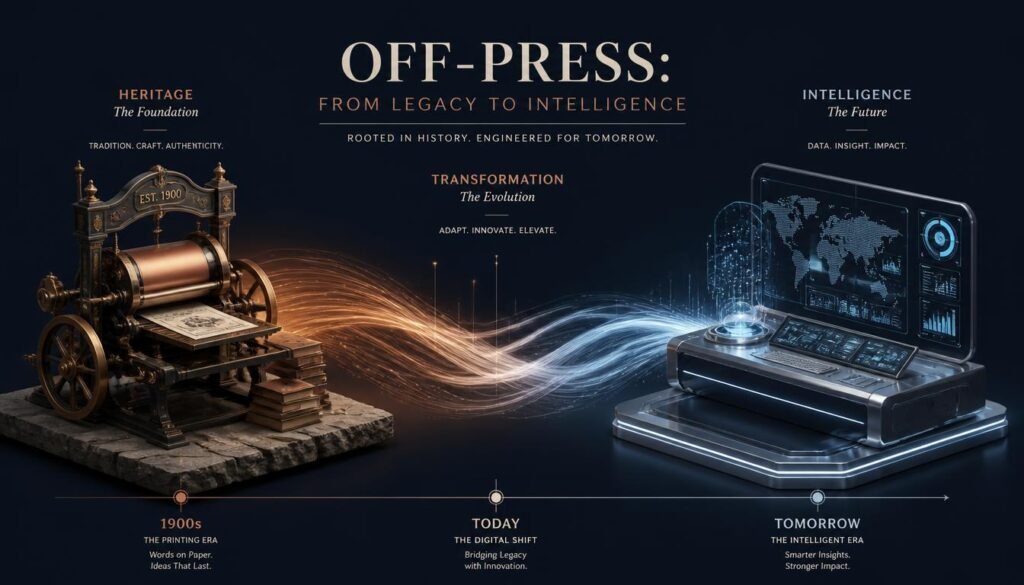
Independent Perspectives on a Changing Creative Landscape
Publishing and media are undergoing one of the most significant periods of transformation in their history.
Digital distribution has changed how audiences discover content. Subscription models have altered the economics of publishing. Social platforms have transformed the relationship between creators and audiences. Artificial intelligence is beginning to reshape research, translation, editing, production and content discovery.
At the same time, many of the fundamental principles of publishing remain remarkably durable.
Editorial judgement matters.
Ideas matter.
Originality matters.
Trust matters.
And the ability to communicate complex subjects clearly remains one of the most valuable capabilities in the modern creative economy.
OFF-PRESS examines these developments from a broad editorial perspective.
Rather than focusing exclusively on individual technologies or short-lived trends, we are interested in the wider systems surrounding them. We explore how publishing organisations, media businesses, creators, technology companies and audiences are adapting to a rapidly changing environment.
The result is a publication designed for readers who want more than surface-level commentary. Read our latest analysis on digital publishing trends, creator business models, and media innovation at the OFF-PRESS Research
Our Editorial Mission
The mission of OFF-PRESS is to provide thoughtful, accessible and professionally useful analysis of the publishing and creative ecosystem.
Our coverage encompasses traditional publishing alongside digital media, emerging technology, creative entrepreneurship and the increasingly important infrastructure that supports modern content creation.
We believe the boundaries between publishing, media and technology are becoming increasingly fluid.
A publisher may now operate a digital community, distribute podcasts, use artificial intelligence for research and translation, analyse audience behaviour through sophisticated analytics and generate revenue through subscriptions.
A technology company may effectively operate as a publisher.
A creative agency may develop its own intellectual property.
An independent author can reach an international audience without traditional distribution infrastructure.
These developments make the publishing ecosystem more interesting, but also considerably more complex.
OFF-PRESS exists to examine that complexity.
01. Publishing & Editorial
Publishing remains at the heart of OFF-PRESS.
Our Publishing & Editorial coverage examines the organisations, processes, people and commercial models responsible for bringing ideas from creation to audience.
Topics include independent publishing, editorial strategy, books, authors, publishing businesses, literary journals, editorial workflows, publishing economics and changing approaches to content distribution.
We are particularly interested in the evolution of publishing models.
Traditional publishing continues to play an important role, but it now exists alongside self-publishing, digital-first publications, subscription services, newsletters, specialist publications, creator-led media and other emerging formats.
This changing environment raises important questions.
How should publishers respond to changing reader expectations?
What does editorial quality mean when publishing can happen almost instantly?
How can independent publishers develop sustainable business models?
How are publishers using technology without compromising editorial judgement?
And what will the publishing organisation of the future look like?
These are the kinds of questions OFF-PRESS seeks to explore.
02. Digital Media & Content
The modern media environment extends far beyond newspapers, magazines and conventional websites.
Digital publishing has created an enormous ecosystem of newsletters, podcasts, online publications, creator platforms, communities, video channels and specialised information services.
Our Digital Media & Content pillar examines this transformation.
Coverage includes digital publishing, online media, content strategy, audience development, newsletters, podcasts, creator businesses, digital storytelling and emerging distribution models.
We are interested not simply in the tools used to distribute content, but in the structural changes those tools create.
The relationship between publisher and audience is changing.
The distinction between professional media organisation and independent creator is becoming less obvious.
And the economics of digital attention continue to evolve.
Understanding these changes requires looking beyond individual platforms and examining the broader ecosystem.
03. Literature, Culture & Ideas
The original traditions of literature, translation and cultural exchange remain important to the identity of OFF-PRESS.
Literature is not simply a publishing category. It is a means through which societies examine themselves, exchange ideas and understand experiences beyond their immediate environments.
Our Literature, Culture & Ideas coverage explores contemporary literature, translation, international culture, cultural trends, creative expression, reading behaviour and the relationship between culture and technology.
We are particularly interested in the way digital communication is changing cultural exchange.
Ideas now travel internationally with extraordinary speed.
Writers can reach audiences thousands of miles away.
Translations can be produced and distributed digitally.
Independent cultural publications can operate without traditional institutional infrastructure.
Technology therefore creates new opportunities for cultural exchange while also raising difficult questions around authorship, authenticity, ownership and editorial responsibility.
OFF-PRESS aims to approach these subjects with curiosity and intellectual independence.
04. Creative Industries & Innovation
The creative economy has become an increasingly important part of modern business.
Publishing, design, advertising, media, entertainment, photography, software, cultural organisations and independent creative businesses increasingly overlap.
Our Creative Industries & Innovation pillar examines the business and strategic dimensions of this environment.
Coverage includes creative entrepreneurship, innovation, design, creative businesses, intellectual property, new business models, digital creativity and the changing nature of creative work.
We are interested in the practical realities facing creative organisations.
How can creative businesses build sustainable revenue?
How does technology influence creative decision-making?
What happens when creative work becomes increasingly automated?
How can organisations protect originality while embracing innovation?
And how are new generations of creative entrepreneurs building businesses around intellectual property, communities and digital distribution?
These questions are particularly relevant as creative organisations become increasingly technology-enabled.
05. Publishing Technology & AI
Technology is now deeply embedded in the publishing process.
Content management systems, analytics platforms, digital distribution tools, translation technologies, automation and artificial intelligence are changing how content is researched, produced, edited, distributed and discovered.
Our Publishing Technology & AI pillar examines these developments through the specific lens of publishing and creative production.
This includes artificial intelligence in publishing, editorial technology, content management, automation, AI-assisted translation, publishing software, digital workflows and emerging content technologies.
We take a measured approach to technological change.
Innovation should not be confused with progress simply because a technology is new.
The important questions concern usefulness, reliability, sustainability, transparency and the effect technology has on the quality and integrity of published work.
Artificial intelligence presents enormous opportunities, but it also creates significant questions around originality, attribution, intellectual property, editorial oversight and trust.
OFF-PRESS examines these questions as part of the broader evolution of publishing and media.
Publishing in the Digital Era
The modern publishing environment is defined by convergence.
A book can become a podcast.
A magazine can become a community.
A newsletter can become a media company.
An author can become a publisher.
A software platform can become a distribution network.
A technology company can become a source of information for an entire industry.
These developments challenge many traditional assumptions about what publishing actually means.
OFF-PRESS takes a broad definition.
Publishing is fundamentally about creating, organising, communicating and distributing ideas.
The technologies and commercial models surrounding that process will continue to change.
The underlying importance of credible information will not.
A Platform for Professional Perspectives
OFF-PRESS is designed to provide a platform for informed perspectives from professionals working across publishing, media, technology and the creative industries.
We welcome contributions that bring genuine expertise, original analysis or practical experience to subjects within our editorial scope.
Contributors may include publishing professionals, editors, authors, researchers, technology specialists, consultants, creative professionals, entrepreneurs and practitioners working across related disciplines.
Our preference is for material that contributes something meaningful to the conversation.
That might be original research.
It might be a detailed analysis of an emerging trend.
It might be practical experience from implementing a new publishing technology.
It might be an examination of an important cultural development.
What matters is substance.
Editorial Independence
OFF-PRESS is committed to maintaining an independent editorial identity.
Commercial relationships, sponsorship opportunities and external contributions should not compromise the quality or integrity of editorial coverage.
We distinguish between useful industry expertise and promotional material.
Our objective is to provide readers with information that is relevant, considered and useful rather than simply reproducing marketing claims.
This principle becomes increasingly important as the boundaries between publishing, marketing and corporate communication continue to blur.
Readers should be able to understand what they are reading and why it has been published.
Looking Ahead
The future of publishing will not be defined by a single technology.
It will be shaped by the interaction of technology, economics, culture, creativity and human behaviour.
Artificial intelligence will influence production.
Digital platforms will influence distribution.
Changing consumer expectations will influence business models.
Independent creators will continue to challenge established structures.
And publishers will need to balance technological opportunity with editorial responsibility.
OFF-PRESS will continue to examine these developments as they unfold.
Our purpose is not to predict every change with certainty.
It is to understand the forces driving change and provide readers with useful context for interpreting them.
Explore OFF-PRESS
Whether your interests lie in traditional publishing, digital media, literature, creative business, emerging technology or the future of content, OFF-PRESS provides a connected view of an increasingly interconnected ecosystem.
Explore our coverage across Publishing & Editorial, Digital Media & Content, Literature, Culture & Ideas, Creative Industries & Innovation, and Publishing Technology & AI.
Read our latest analysis, explore our specialist topics and discover perspectives from professionals working across the modern publishing and creative landscape.
OFF-PRESS is built around a simple principle:
Good publishing starts with good ideas, and good ideas deserve thoughtful attention.